Happy Monday my friend – hope you had a restful weekend and managed to switch off a little.
Things have been ticking over nicely here, though I’ve been doing a lot of observing recently.
I’m going to do something a little different this week.
I have a topic on my mind that is too big (and too important) for just one email, so I’m splitting this into a two-part mini-series - Part 2 of which will land in your inbox on Wednesday.
You'll have probably seen me speaking about it a little over on social media this week as well.
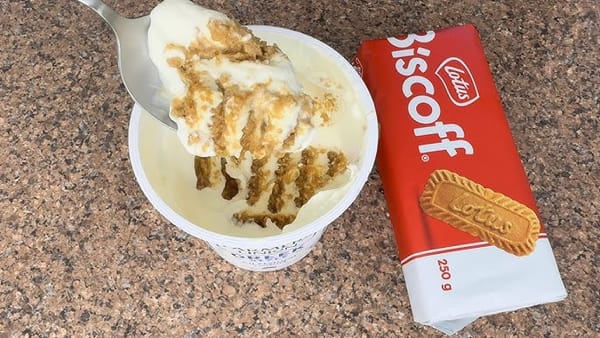
What’s the topic? It's the viral "Healthy Biscoff Cheesecake."
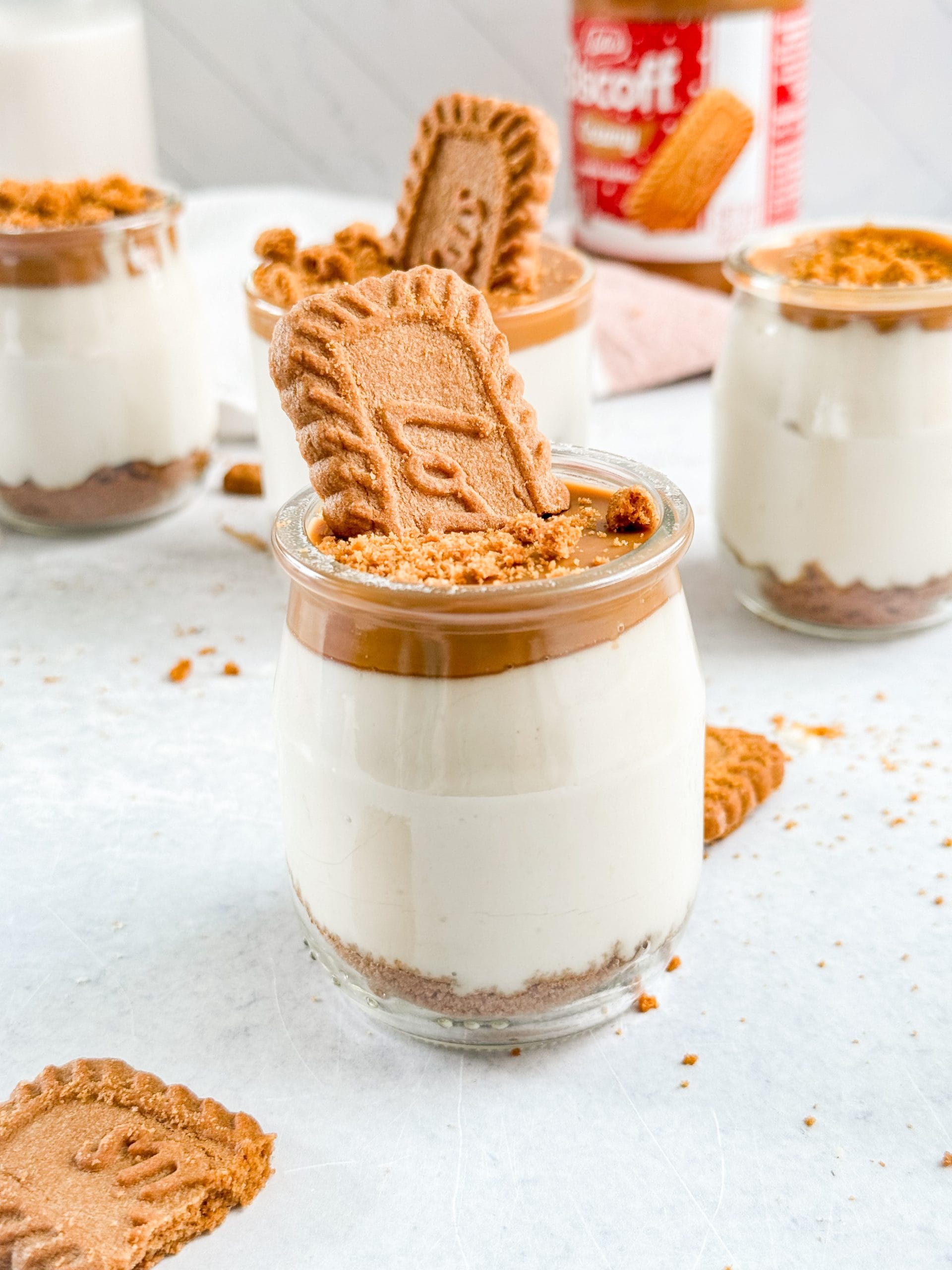
You’ve probably seen it on your feed on one or more of your favourite social media platforms; it's literally everywhere.
It usually involves mixing Greek yogurt with a number of Biscoff biscuits - and that's pretty much it.
Then the influencer who posts it takes a bite, and rolls their eyes back as if it’s the greatest thing they’ve tasted in their entire life, while also claiming it's a "healthy alternative".
Now before I jump in, let me be clear: I am not saying this is "bad" food.
If it helps you hit your protein goals, that's fine.
If you genuinely love the taste of Greek yoghurt mixed with biscuits, that's great.
But I think the obsession with these types of faux-healthy "recipes" reveals a deeper issue in the psychology of modern-day wellness.
The "Cheat Code" mentality
There seems to be a pervasive idea right now that we can hack our physiology (I hate the term 'biohacking' as well, so there's that).
We are in an era where so many people want the sensation of eating a decadent dessert, but with the nutritional profile of a block of tofu, a cup of beans or some chicken/fish.
I think it's a bit unnecessary.
In the past, diet culture was about extreme restriction. In simple terms, it was "don't eat the cake", and that was that.
Now, modern-day wellness culture is about optimising everything.
So instead of "don't eat the cake", it's "eat the cake" (but make it high-protein, low-sugar, and functional).
Why is this an issue?
Because it perpetuates the idea that healthy food is something that needs to be disguised.
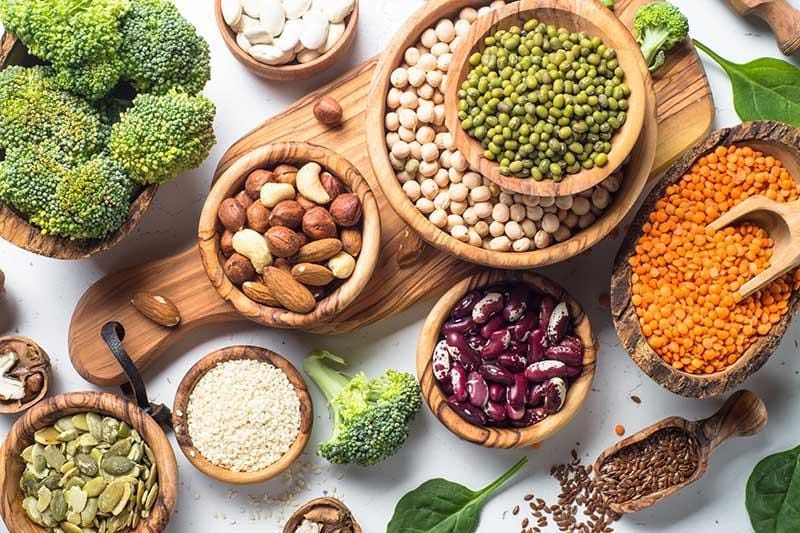
It reinforces the belief that whole foods - fruit, oats, nuts, seeds, Greek yoghurt and so on - aren't satisfying enough on their own.
It tells your brain that in order to be happy with your nutrition, you need to dress it up as "cheesecake" or "cookie dough" or "brownie batter" to make it palatable and enjoyable.
Which in my view, is the totally wrong approach.
The "Uncanny Valley" of food
There is a concept in robotics called the "Uncanny Valley" - basically it's where a robot looks almost human, but isn't actually human.
And it makes us feel a bit weird.
I think we are approaching that point with food.
When you make a "brownie" out of black beans and stevia, or a "cheesecake" out of yogurt and Biscoff biscuits in an attempt to create a "healthier version", you create a bit of a disconnect in your brain.
Your eyes see a dessert which is supposed to taste incredible but your body receives...beans. Or Greek yogurt with biscuits in it.
The result? You feel dissatisfied.
You might feel physically full because of the volume, added protein and so on - but psychologically? You're left feeling incomplete.
Your brain is still looking for the hit that the "healthy hack" promised - but miserably failed to deliver.
Here is a fact: if you constantly require your healthy food to taste like junk food, you never actually adjust your palate to enjoy whole, unprocessed foods.
The fear of the real thing
This follows on from the 80/20 principle I mention so often in my work.
Even though on a personal level I adopt 90% and above, I know for a fact that if we got more people to shift to the 80/20 principle - 80% dialled in and 20% flexible - we would see massive shifts in societal health.
When we spend time in the kitchen concocting a "macro-friendly" version of a cheesecake that - let’s be honest - probably doesn't come close to the real thing in terms of taste, we're acting out of fear.
Fear of calories. Fear of sugar. Fear of losing control of our nutrition.
The extreme views on nutrition and health we see on social media has probably played a large role in this too.
So many people spend time trying to trick their brains, but the brain is smart.
It knows it didn't get the real thing. And guess what; you'll probably just end up getting the real thing anyway.
So why not just eat the real thing to begin with, and go about your day?
So much of health and wellness culture views food through a very reductive lens: numbers, macros, grams and so on.
Some of it has importance, of course - but a hyper-focus on it strips away the different contexts that surround food.
So what do we do?
In Part 2 on Wednesday, I’m going to share what I feel is the solution.
I'm going to talk about re-sensitizing your palate (can't stress how important this is by the way), why strawberries might not taste sweet to you right now, and why you might as well just eat the real cheesecake.
Look out for that one.
Stay healthy,
Jeffrey
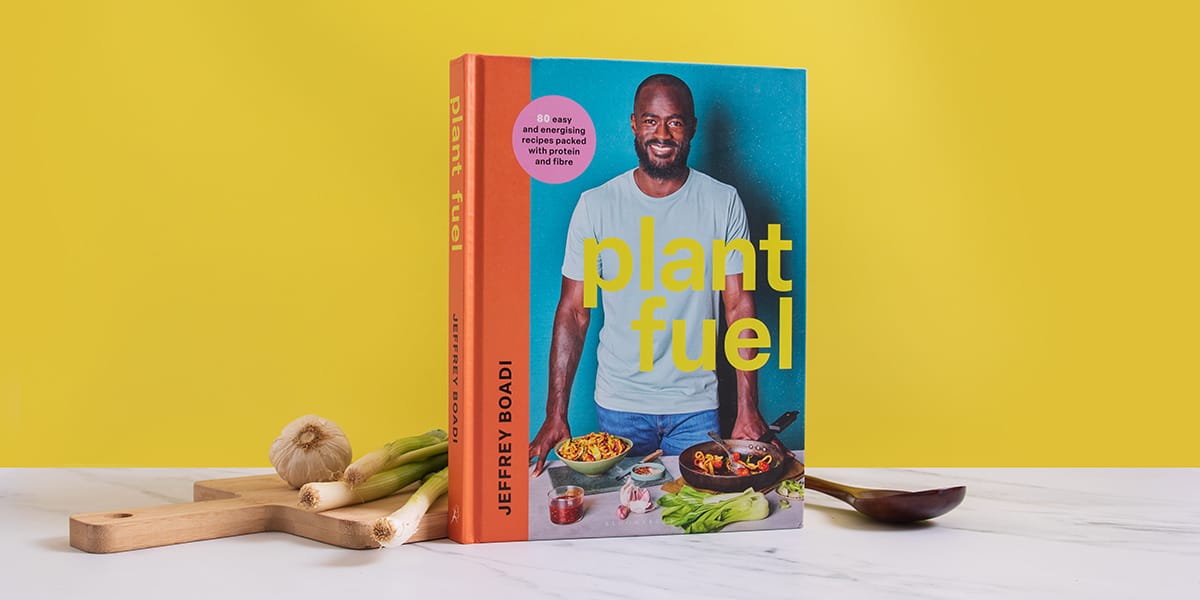
And a last little note... if you want to avoid the "hacks" and just eat delicious, high-protein and high-fibre recipes that don't need to hide behind anything, check out my debut cookbook Plant Fuel. 80 recipes that are simple, effective and repeatable - and ones that you'll love.
If you've supported so far, thank you! I have a favour to ask: if you purchased from Amazon, I would love it if you could leave a review (good or bad)! It would be great to get your view on it - and if it's a good one, it will help the book move up various charts.
Have a great week!