Happy Monday my friend - hope things have been ticking over nicely for you at the start of 2026.
I've got one main idea that I want to get across in this newsletter, and it's about frameworks for eating well without losing your mind: if you adopt these already then great - but if not, I think they could be very useful.
The 80% principle
No doubt you've heard 80/20 thrown out there in terms of the nutritional balance you require to achieve good health.
I personally think this has value.
Not because you should deliberately use 20% of your time eating crap and not training, but I almost see that remaining 20% as a buffer for accepting that life gets in the way.
Things will get busy, you might not be able to get to the home-cooked meals, and convenience might come into play - but that's fine.
Set 80% as the baseline minimum.
Sometimes you might hit 90% and above when things are rolling...and other times it might be a little less secure (family + work commitments).
But if you average out at around 80% as your standard, you will find good health - I'm sure of that.
Cook once, eat twice
Leftovers are one of the most underrated aspects of nutritional consistency.
Whenever you cook - if it's not dedicated meal prep - just cook a much larger batch than you ordinarily would.
Not only are you cooking for yourself in the present moment, but you're also cooking and making solid decisions for future you as well.
That feeling the next day I get when I know I've got nutrient-rich food in the fridge without even having to think? It's unmatched.
Remove decision fatigue
I think this is arguably one of the most important issues when it comes to people's nutritional consistency, and it follows on from the first point.
It's really all about the benefit to yourself when decisions around food are already made.
I'll give you an example: if I already know that 95% of the time my morning meal will be a bowl of oats, that means that my mornings will be covered, and my nutrition gets off to a good start.
I don't think about it, that's just the way it is.
If you know a particular meal works in the context of your life, is straightforward to make and is healthy - keep it in there at all costs.

Simplicity > novelty
This follows on again from the previous point: simplicity helps remove decision fatigue.
Why is this important? Humans tend to have something called Shiny Object Syndrome - meaning that we always want novel experiences all the time.
Whether that be clothing, food choices, entertainment - we always want something new and exciting.
When it comes to building nutritional habits though, this doesn't really work all that well.
You want things to remain simple, rather than chasing a new exciting meal every single day.
So find meals that work for you, and use them consistently.
Win the supermarket
What do I mean by 'win the supermarket'?
To put it simply, all your decisions around food should be made there, and not at home.
Okay Jeff, what does that actually mean?
It means that willpower isn't a good strategy to help you eat well, and winning the supermarket means making the best choices in-store that are going to actually lend to you eating well.
So leave all of the appealing ultra-processed options on the shelves more often than not.
Because bringing them into your house with regularity means you've just got another problem to deal with - trying to exercise willpower.
And willpower is a resource that runs out pretty fast.

Plants at the centre
I'll keep this one brief as I've been banging the drum for more plants in the diet for a long long time now.
But a reason why putting them at the centre is so impactful is that it usually means adding more colour, getting more fibre in and a broader range of micronutrients as well.
And by default, that means improving your nutrient density.
Home cooked ≠ Michelin star
I'll say it: your cooking is allowed to "look bad" if it means you're eating whole foods.
I say this because so many people don't cook because they think it has to be high-level, Michelin star-style stuff that looks Instagram-worthy.
It really, really doesn't.
Is it nice when your food looks good? Sure - but it's not a necessity for good health.
How you feel and how your health improves in the long run is far, far more important.
If you're using whole-food ingredients, and you're in your own kitchen - it counts.

Simplifying nutrition and lifestyle habits is the name of the game.
We live in a busy modern world, and our habits have to reflect this to give us the best chance of success.
Hopefully these tips help!
And just one more thing...
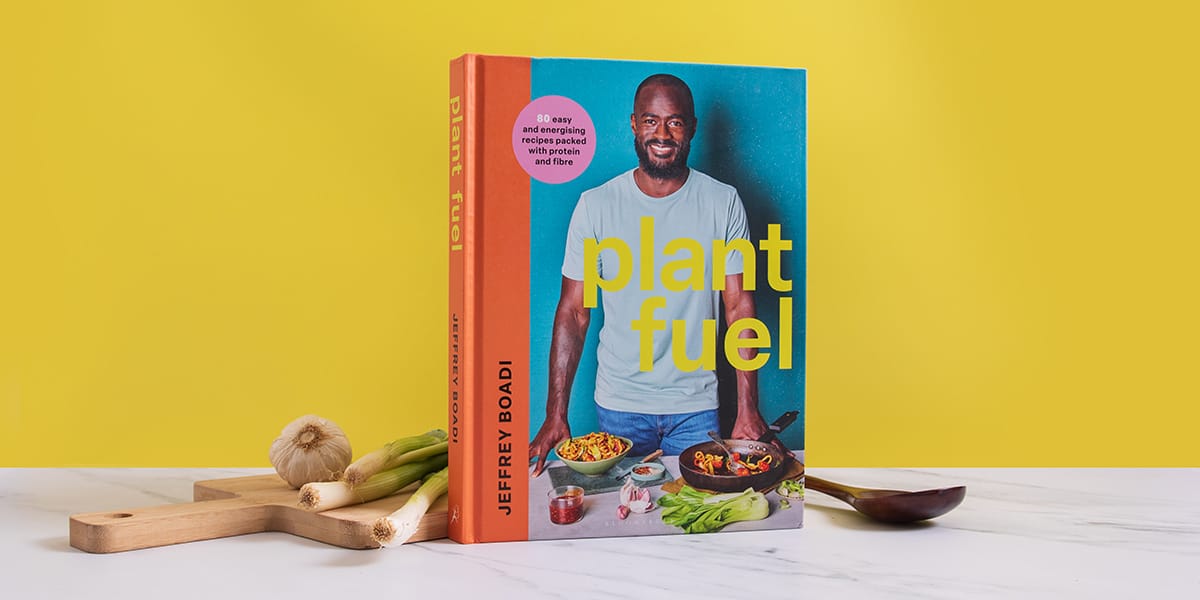
Plant Fuel has been out in the world for 12 days, and I've really appreciated the feedback on it so far! Been great to see people getting stuck into the recipes as well.
My idea was to create something that reflects not just nutritious, accessible and simple food, but recipes that also adhere to frameworks that make eating well a lot easier.
I believe there are tons of nutrient-rich and simple plant-based recipes in here that will help you eat better, and that you'll thoroughly enjoy.
Stay healthy,
Jeff